
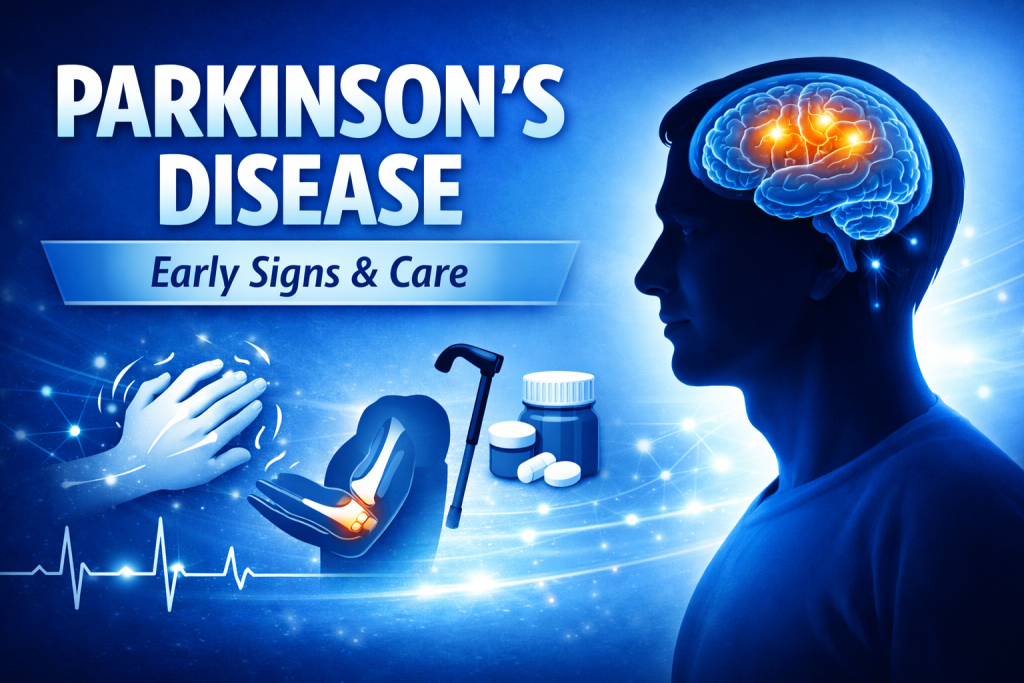
Parkinson’s Disease: Recognizing Early Signs and Managing Symptoms
Parkinson’s is a progressive neurological disorder that primarily affects movement. It occurs when nerve cells in the brain that produce dopamine begin to deteriorate.
Early Symptoms: Tremors, stiffness, slowed movement, and changes in handwriting or facial expression.
Diagnosis: Neurological examination, imaging tests, and symptom tracking help confirm the condition.
Treatment Approaches:
- Medication: Dopamine‑enhancing drugs to improve motor control.
- Therapies: Physiotherapy, speech therapy, and occupational therapy.
- Lifestyle Support: Regular exercise, balanced diet, and emotional support groups.
Living Well with Parkinson’s: Staying active and socially engaged can greatly improve daily functioning and mood.
Conclusion: While Parkinson’s cannot yet be cured, early care and consistent management empower patients to lead fulfilling lives with dignity and strength.